
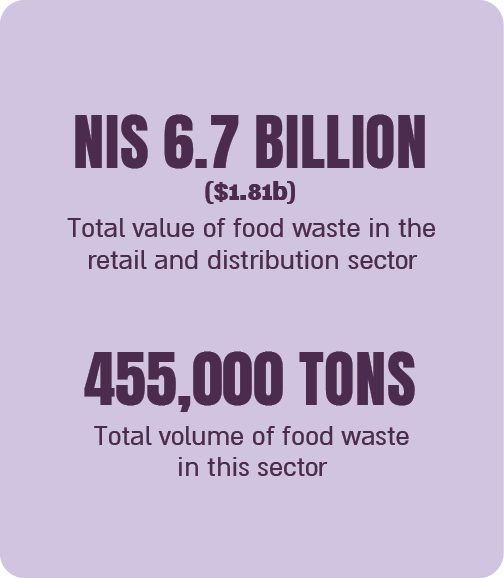
6.7 billion NIS
Total value of food waste in the retail and distribution sector
455,000 tons – Total volume of food waste in this sector
Food Waste and Rescue Along the Value Chain – Challenges, Potential, and National Benefit
The final three stages of the food value chain—retail and distribution, institutional consumption, and household consumption—are the primary sources of food loss and waste in Israel’s food system. Positioned closest to the end consumer, these stages reflect the full cost of production, transport, and logistics. Consequently, food wasted at this point not only represents significant economic waste but also has far-reaching social and environmental impacts.
Food Waste and Rescue: Retail and Distribution Sector
In terms of value loss, the retail and distribution sector is one of the most significant in the food value chain. By the time food reaches this point, it has already undergone cultivation, processing, packaging, and transportation—making it ready for sale and consumption.
In 2024, the supply of agricultural produce marketed in Israel declined, partly due to the Swords of Iron War, which led to a temporary reduction in local production. Alongside the drop in supply, food prices rose sharply, resulting in an overall increase in the monetary value of food waste in the retail sector.
Total food waste in this sector reached approximately 455,000 tons, with an estimated value of NIS 6.7b. ($1.81b) Of this, about 360,000 tons, worth NIS 5.4b,[1] ($1.46b) were rescuable. In addition, the environmental cost of food waste at the retail and distribution stage is estimated at NIS 920m,[2] ($249m) with a public health cost of approximately NIS 1.3b ($350m).
[1] The estimate of rescuable food in this stage is based on BDO’s retail sector model, which incorporates CBS data as well as information provided by major retail chains.
[2] This environmental cost is not reflected in the market price of the lost food, which does not include the cost of natural resources lost due to food waste in this sector.
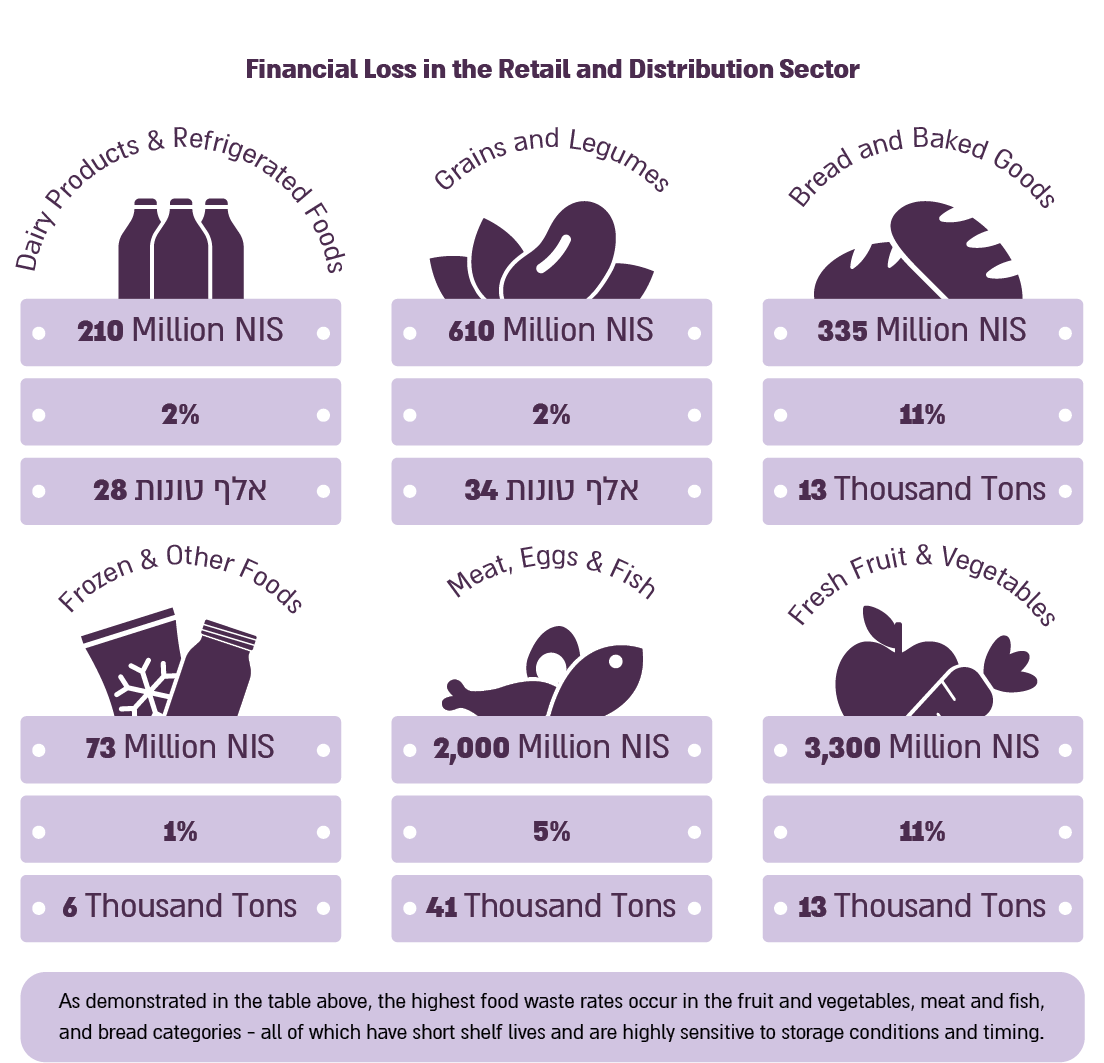
Key drivers of food waste in the retail and distribution sector:
- Shelf life – Food that is not sold before its expiration date is deemed unsuitable for sale or donation and is removed from circulation. Contributing factors include inaccurate inventory planning, return policies to importers, and the lack of incentive mechanisms for surplus redistribution—all of which lead to the disposal of large amounts of edible food.
- Aesthetic imperfections – Products with damaged packaging, dents, or altered appearance are often rejected for sale, despite being completely safe and suitable for consumption.
- Logistical damage – Items such as dropped fruit, broken eggs, and butcher shop remnants result in unavoidable waste, however their overall volume is relatively low.
Market Failure: Structural Food Surpluses
Despite significant investments by retailers in inventory management, refrigeration systems, and forecasting tools, structural food surpluses persist in this sector. Retailers prefer to maintain a full range and high availability of products to avoid empty shelves, which could lead to customer loss. This creates a commercial incentive to prioritize surplus over shortage, even when it results in systematic food waste.
In addition, return agreements with suppliers, where unsold goods are returned to the producer at no cost, effectively remove the retailer’s responsibility to reduce actual waste. This creates a market failure, as there is no economic incentive to rescue surplus food.
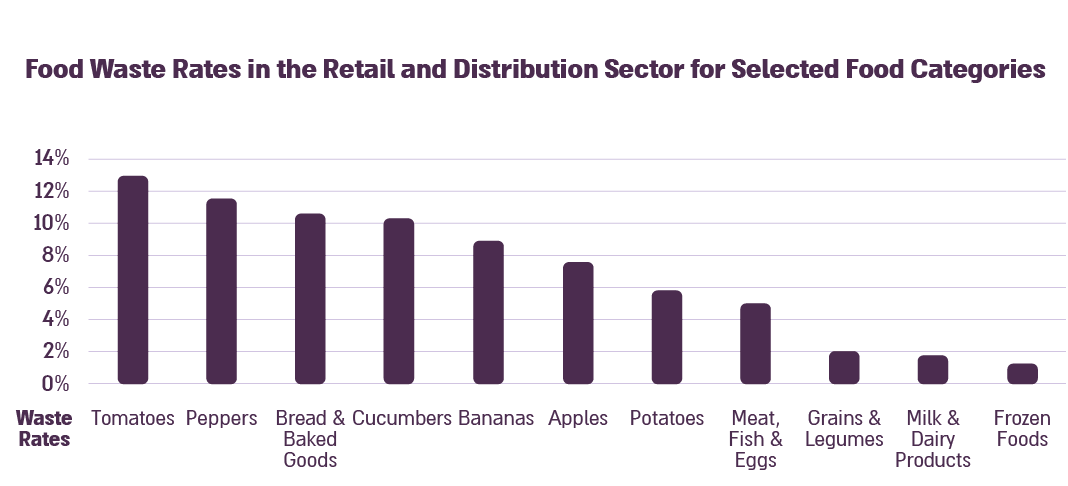
Waste rates are highest in fresh and highly perishable categories such as fruit, vegetables, bread, and fish, while more durable items like frozen foods and legumes show significantly lower levels of waste.
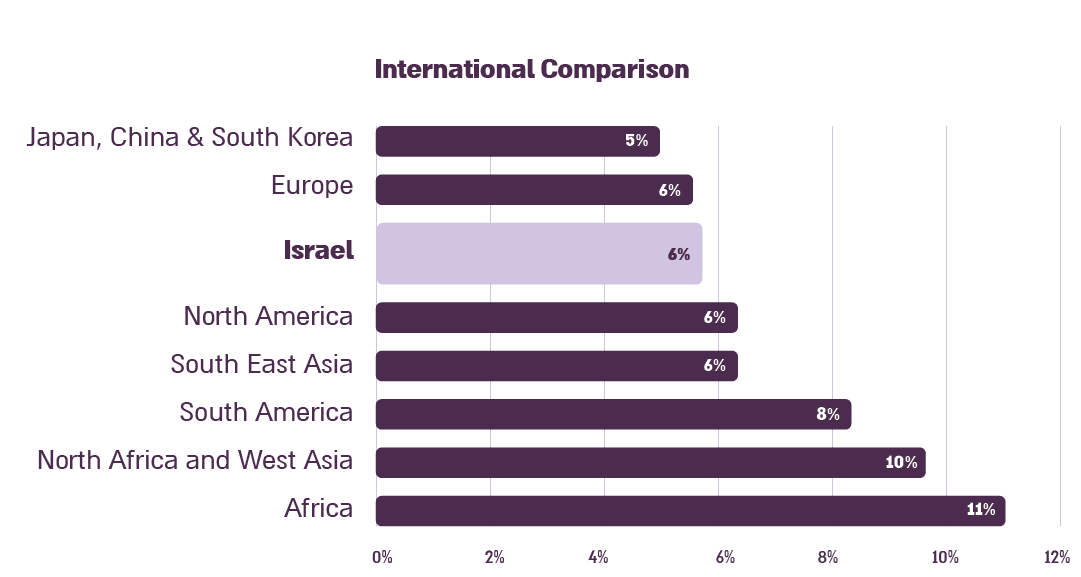
When compared internationally, food waste rates in Israel’s retail and distribution sector are similar to those in developed countries, despite the country’s hot and humid climate, which increases the risk of spoilage. This suggests that inventory and waste management practices in the sector are maintained at relatively high standards. In contrast, developing countries typically experience significantly higher waste rates, primarily due to insufficient infrastructure for distribution, storage, and marketing.
In recent years, food retailers have invested heavily in advanced logistics centers, digital inventory management and demand planning systems, and the maintenance of cold chains during distribution. These developments have significantly contributed to reducing food waste in the retail and distribution sector.
Concurrently, since the COVID-19 pandemic, consumer purchasing patterns have increasingly shifted toward supermarket chains and online platforms—channels typically associated with lower rates of food waste. As a result, this sector has seen a modest decline in food waste over the past year.
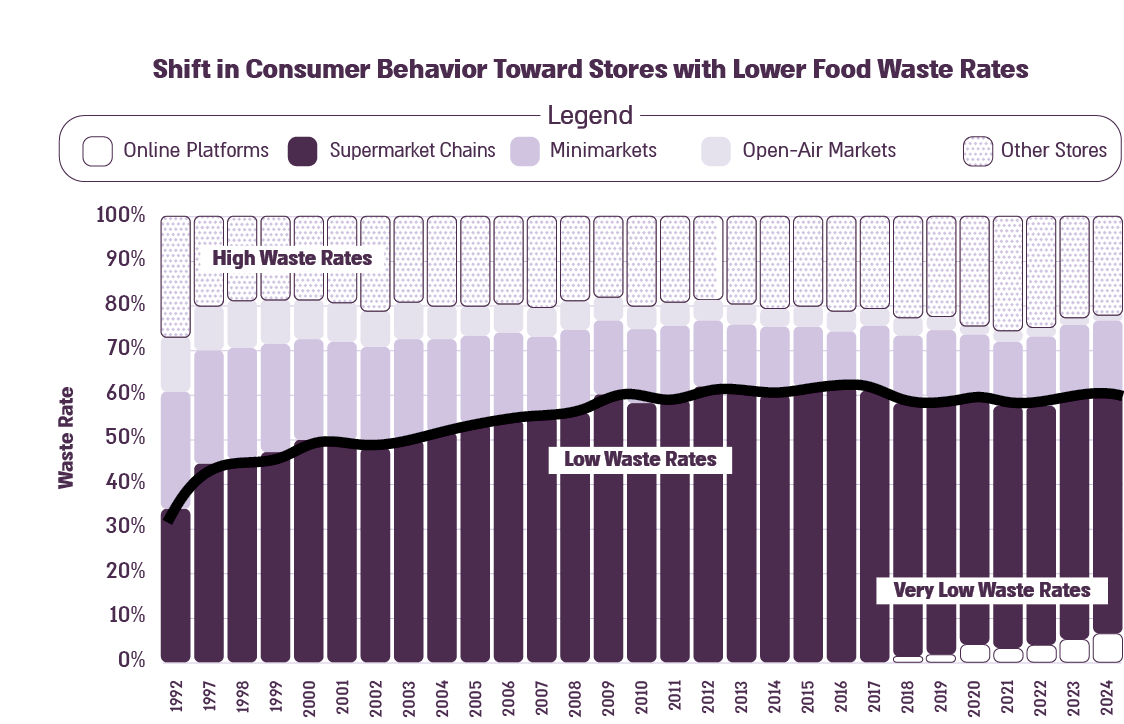
The ongoing shift in consumer behavior toward low-cost, efficient retail chains, and particularly online shopping platforms, has led to a slow but steady decline in food waste rates. According to the 2024 UN Conference on Trade and Development (UNCTAD) report,[1] consolidating deliveries and reducing individual travel to retailers can cut transit-related greenhouse gas emissions in the retail sector by up to 87%, providing an additional environmental incentive to favor retailers with optimized shelf management.
Food Rescue Potential in the Retail and Distribution Sector
Approximately 360,000 tons of food waste at this stage are rescuable—primarily fruit and vegetables (225,000 tons). Food rescue at this stage alone could offset nearly 50% of the national food gap experienced by those living with food insecurity.
Rescuing this volume of food could also save the Israeli economy an estimated NIS 2.9b ($780m) annually in excess healthcare costs (see Chapter 5).
Actions to Reduce Food Waste and Promote Food Rescue
In addition to the structural causes of food waste, the retail and distribution sector also sees ongoing efforts to reduce waste and rescue edible food.
Retailers and producers have adopted a range of waste-reduction practices, some driven by economic incentives, others by social responsibility commitments. These include:
- Discounted sales of surplus – Products close to their expiration date or with minor packaging defects are sold at reduced prices to consumers.
- Food donations to nonprofit organizations – Coordinated through formal partnerships or local branch initiatives.
- Secondary market channels – Products with aesthetic or packaging flaws that are still safe to eat are sold through alternative distribution networks.
- Rescue of surplus from production facilities – Manufacturers donate production overruns or short-dated products through specialized nonprofit organizations.
While these efforts help reduce the amount of rescuable food waste, the potential for food rescue in the retail sector remains significant and requires systematic, structural incentives to be fully realized.
Food Waste and Rescue: Retail and Distribution Sector
The institutional sector saw significant changes in food consumption and dietary trends during 2024:
Impact of the War and Reservist Mobilization: As a result of the Swords of Iron War, the average monthly number of reservists rose to approximately 140,000, driving increased food demand in IDF kitchens and other defense-related logistical operations. At the same time, the absence of reservists from their civilian workplaces led to reduced food consumption in workplace cafeterias and institutional dining facilities across various organizations and industries. Thus, while the overall volume of institutional food consumption remained stable, its distribution shifted significantly across different types of institutional settings.
Changes in Workplace Food Consumption – Since the outbreak of COVID-19, significant changes have occurred in work patterns. Most notably, regular office attendance has declined. According to a 2023 report[1] by the Ministry of Labor, approximately 18% of Israeli employees work from home at least one day a week. This shift to a hybrid work model has had mixed effects on food waste: on one hand, having fewer employees on-site has led to reduced waste in institutional catering systems; on the other hand, uncertainty about the number of diners each day makes logistical planning more difficult for food providers, leading to increased food waste.
In addition, the growing trend of ordering individual meals through apps like Wolt and 10Bis has led to a decline in the use of traditional workplace cafeterias. While this shift reduces overall food waste—since meals are prepared on demand—it also complicates efforts to collect and redistribute surplus food. Although comprehensive data is lacking on the extent to which institutional meals have been replaced by delivery services, and some of this shift has also replaced dining in nearby restaurants, field observations and data from Leket Israel’s cooked food rescue operations indicate that some workplaces have stopped using centralized catering altogether, thereby limiting logistical opportunities for surplus food rescue.
In the hotel industry, overnight stays declined by 14% in 2024 compared to 2023. The impact of the war was evident: international tourism dropped sharply, while at the same time, the number of Israeli guests staying in hotels, including evacuees, increased.
The events industry also faced a particularly challenging year. The prolonged conflict and security escalation in northern Israel led to the postponement or cancellation of thousands of events. Many couples were forced to cancel weddings in areas under direct threat in light of Home Front Command guidelines and concerns for guests’ safety. In addition, thousands of reservists called up during the war had to postpone their weddings repeatedly.
According to assessments done for this Report,,[2] over 2 million people in Israel dined outside the home on an average day, consuming an average of 1.1 meals per day. This amounts to approximately 720 million out-of-home meals per year, and about 800,000 tons of food. The total annual expenditure on food consumed outside the home is estimated at NIS 15b (4.05b).
Food Waste in Institutional Consumption
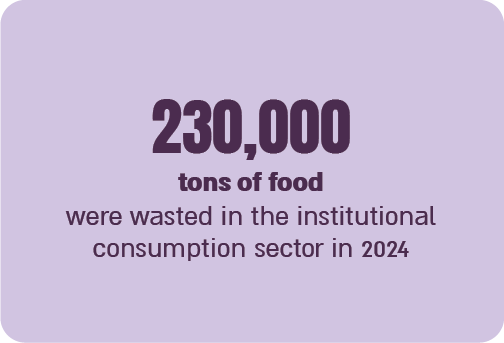
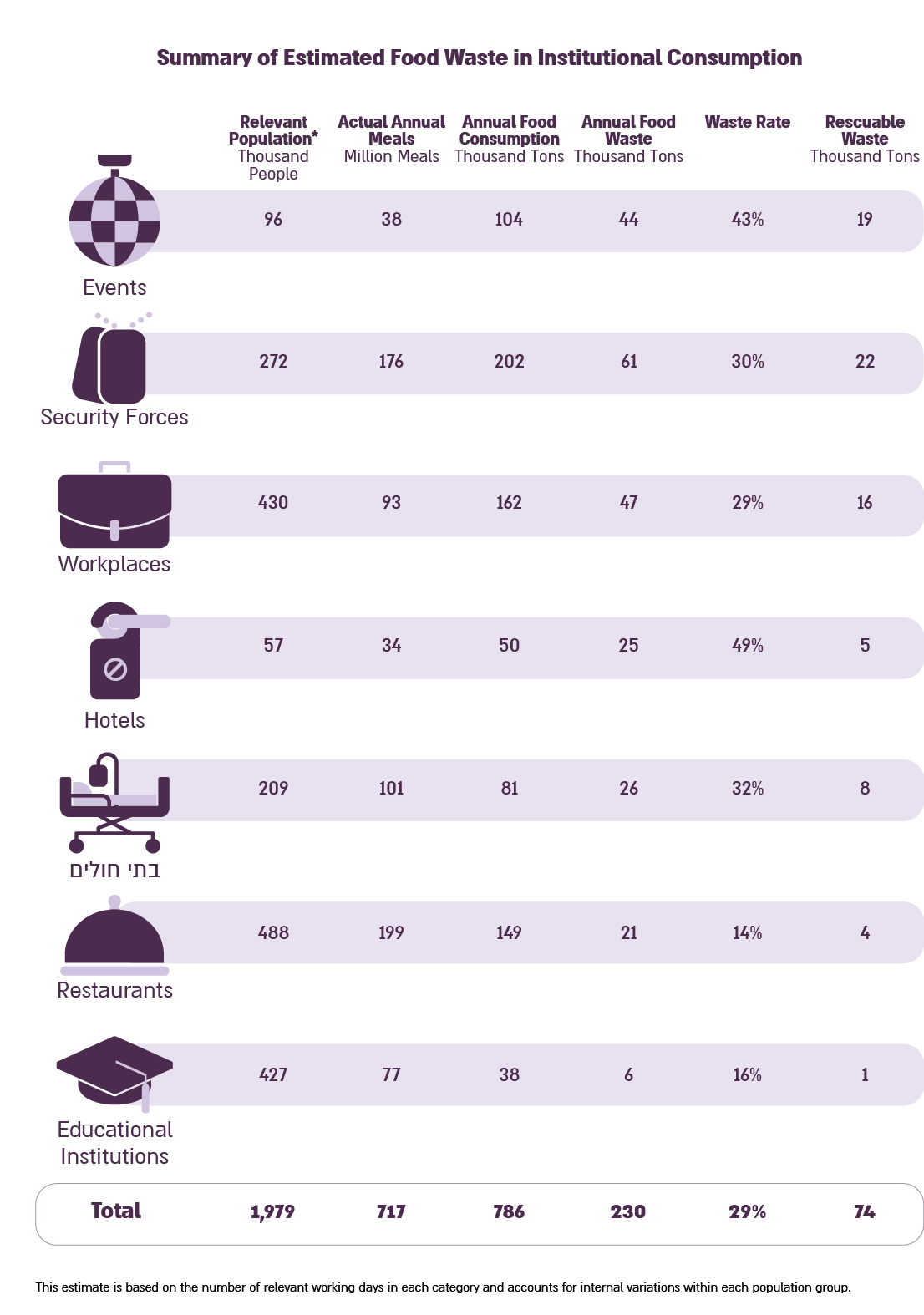
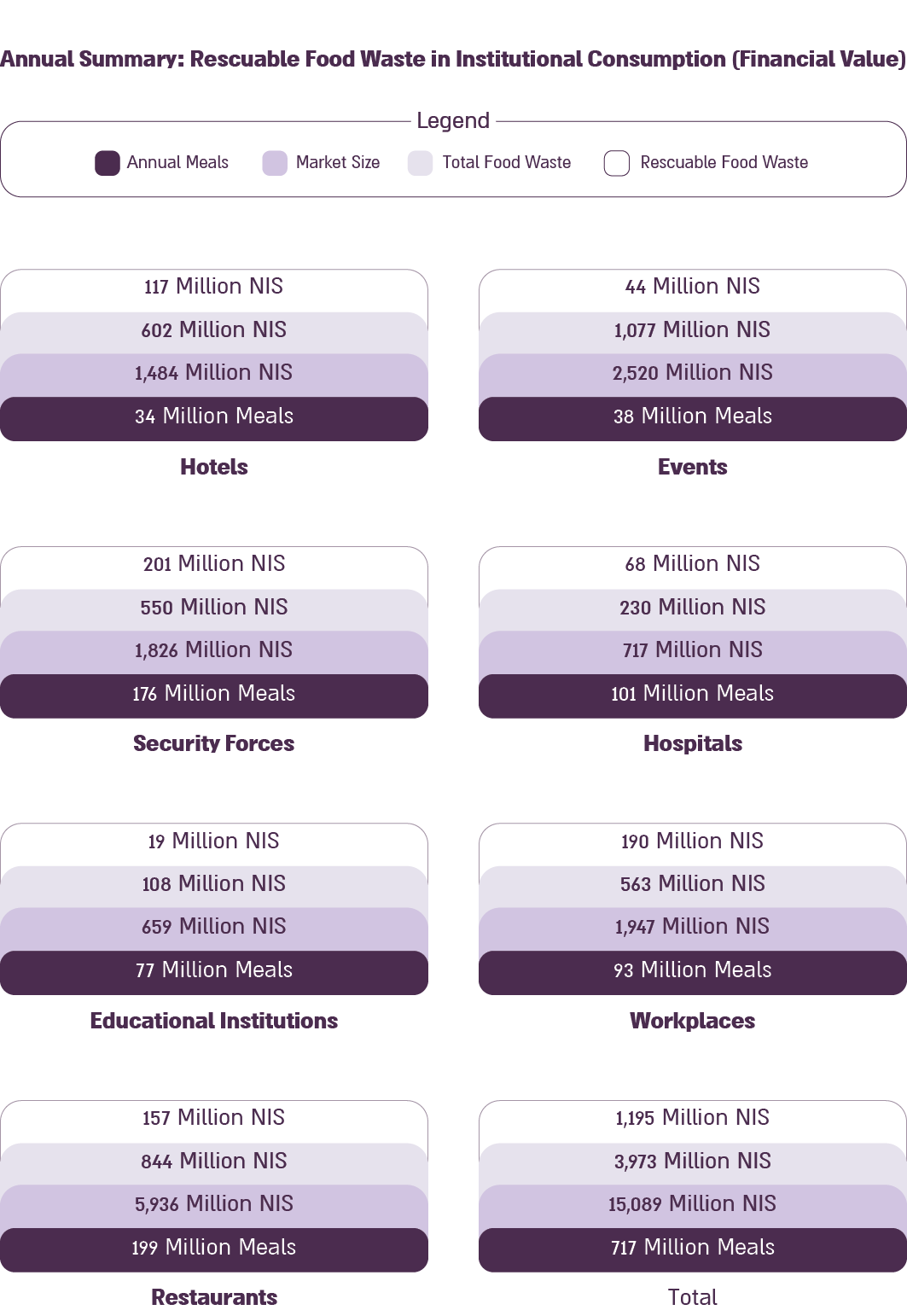
Food waste in the institutional consumption sector is estimated at approximately 230,000 tons in 2024, with a total monetary value of about NIS 4b ($1.08B). Of this, around 77,000 tons, worth approximately NIS 1.25b ($340m), are rescuable. Rescuing this volume could provide roughly 67 million full, nutritionally balanced meals.
[1] Ministry of Labor Report, 2023
[2] The BDO model for assessing food waste in the institutional sector is based on data from the CBS, the Israeli Restaurant Association, the Association of Banquet Hall, Event Venue, and Catering Owners, and the Security Forces.
Sources of Food Waste in Institutional Settings
Food waste occurs across a wide range of institutional environments, including hospitals, educational institutions, workplaces, hotels, restaurants, nursing homes, industrial facilities, and event venues. In these settings, food waste is primarily caused by poor planning, unexpected fluctuations in the number of diners, varying dietary requirements, logistical inefficiencies, and overproduction in central kitchens.
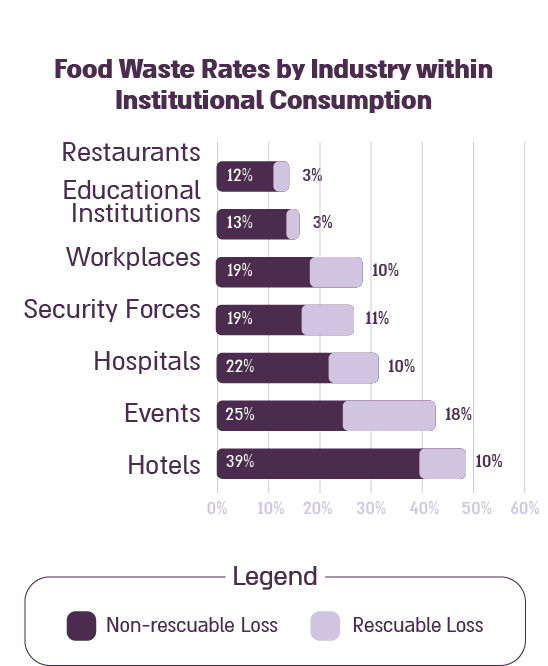
The type of food service and payment model also influence food waste levels. For example, in restaurants where meals are prepared to order, waste rates are low, in contrast to buffet-style service, which requires food to be prepared in advance. In other words, when consumers pay based on actual consumption, food waste is lower than in all-inclusive models.
The increase in food consumption and waste compared to 2023 is attributed to a combination of factors: population growth, a rise in employment, increased security force activity during the war, and higher hospital bed occupancy. However, these increases are tempered by overlapping trends, including a sharp decline in the events sector, reduced activity in restaurants and cafés, lower hotel occupancy rates, and decreased operations in educational institutions.
Approximately 35% of rescuable food waste occurred at events, where an estimated 19,000 tons of food worth about NIS460 m ($124m) could have been rescued in 2024. Military bases, hotels, and workplaces represent additional key rescue opportunities, each with potential food rescue values ranging between NIS120 m ($32m) and NIS240 m ($65m), and in hospitals, the estimated value of rescuable food is NIS70 m ($19m). While restaurants also generate a significant amount of rescuable food, estimated at NIS160 m ($43m) per year, the cost-effectiveness of rescue operations is generally low due to the wide geographic dispersion and lack of critical volume.
The high return on food rescue in the institutional sector is driven by the relatively high value of each rescued meal, combined with the comparatively low logistical costs of collecting food from large kitchens located in densely populated urban and industrial areas.
The 76,000 tons of rescuable food generated annually in the institutional consumption sector could help close approximately 12% of the nutritional gap faced by individuals experiencing food insecurity in Israel. In addition, rescuing this food could yield public health cost savings of roughly NIS 0.7b ($190m) each year.
Food Waste and Rescue: Household Consumption Sector
In the wake of the Swords of Iron War, institutional food consumption declined, particularly in restaurants, event venues, and educational institutions. At the same time, household food consumption rose, leading to a corresponding increase in food waste at the household level.
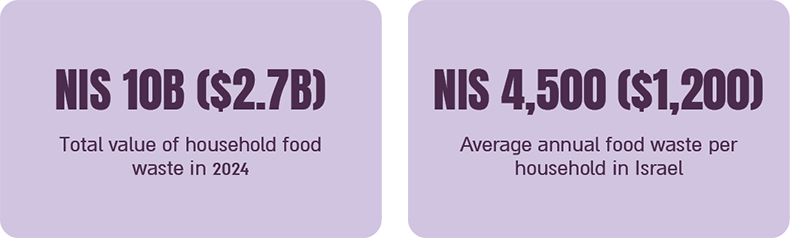
In 2024, Israeli households wasted an estimated 960,000 tons of food,[1] valued at approximately NIS 10b ($2.7b). Beyond this direct financial cost, the environmental impact of this waste is estimated at an additional NIS 0.9b ($240m).[2]
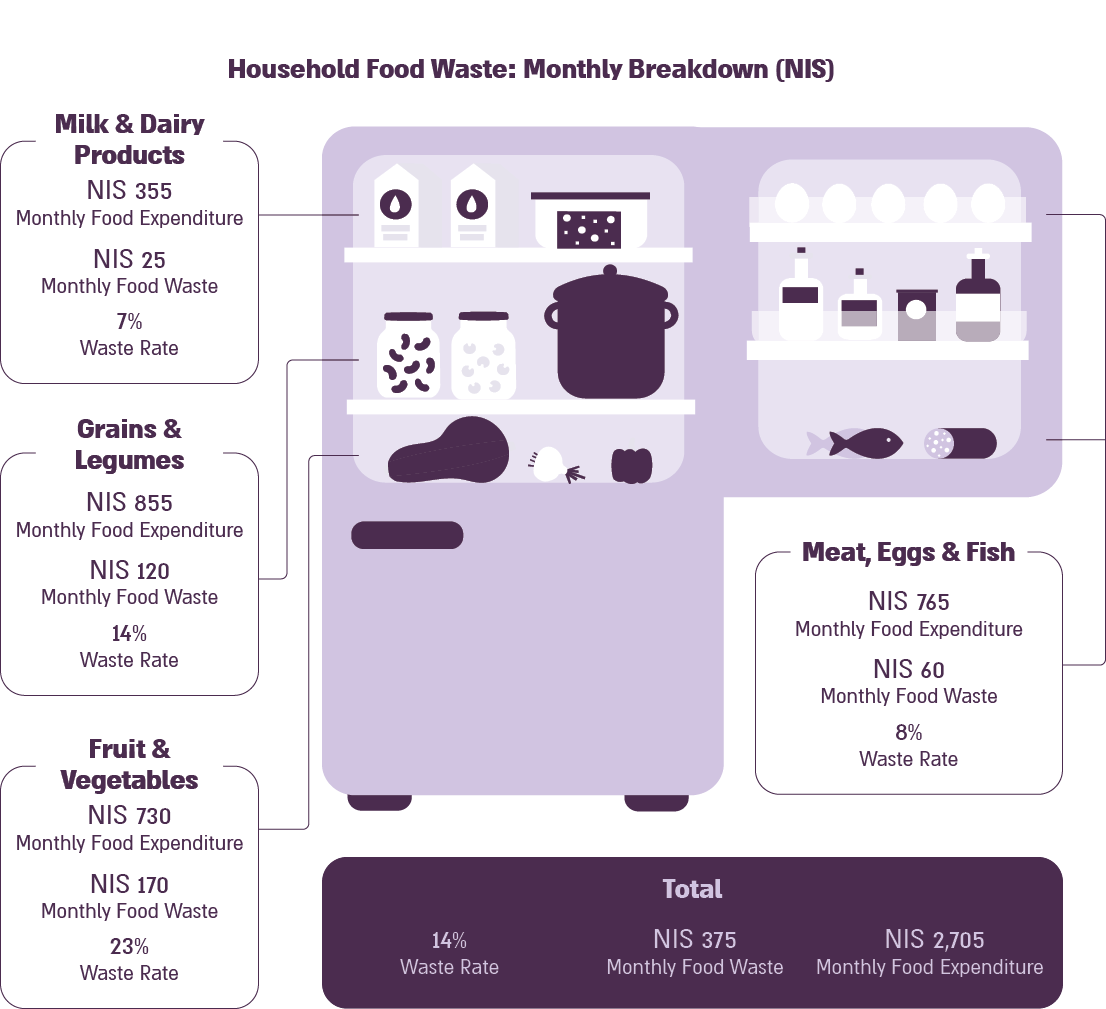
In 2024, the average Israeli household wasted about 14% of its annual food expenditure—roughly NIS 4,500 ($1,200), equivalent to more than six weeks’ worth of food. This translates to a monthly loss of around NIS 375 ($101) in the household consumption sector, broken down as follows: NIS 170 ($46) from fruit and vegetables, NIS 120 ($32) from grains and legumes, NIS 60 ($16) from meat, eggs, and fish, and NIS 25 ($7) from milk and dairy products.
[1] This analysis is based on the BDO value chain model, weighted data from the CBS (2023), the national waste composition survey by the Ministry of Environmental Protection (2012–2013), a Geocartography survey conducted in January 2019, and the study by Dr. Ofira Ayalon, Efrat Elimelech, and Eyal Ert: “What Gets Measured Gets Managed: A New Method of Measuring Household Food Waste” (Waste Management, 2018).
[2] The environmental cost presented here does not reflect the market value of the food waste, but rather the external cost of lost natural resources associated with food waste in this sector.
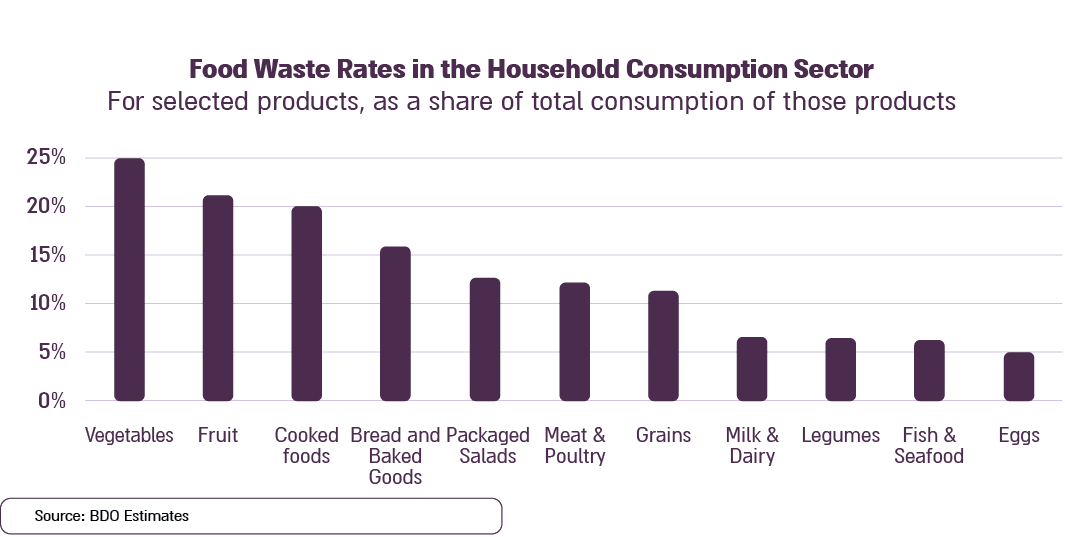
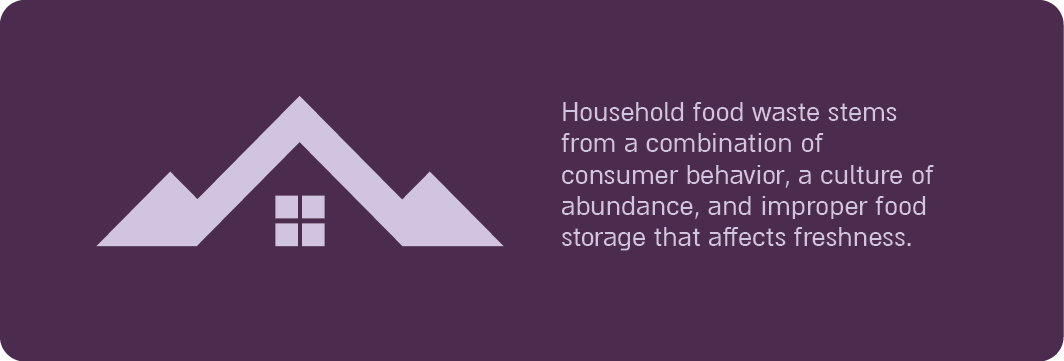
Household food waste stems from a combination of consumer behavior, a culture of abundance, and improper food storage. The total annual value of food waste from household consumption is estimated at approximately NIS 10b ($2.7b).
The primary causes of household food waste include:[1]
Overpreparation – Cooking or preparing more food than is needed, often resulting in leftovers that go uneaten. This phenomenon is frequently linked to over-purchasing.
Expired Products – Food that is not consumed before its expiration date, often due to purchasing more than the household can reasonably use. A desire for variety, combined with uncertainty about daily consumption needs, frequently results in food expiring before it is eaten.
[1] Based on findings from the Geocartography survey conducted in March 2021 by Leket Israel and BDO.
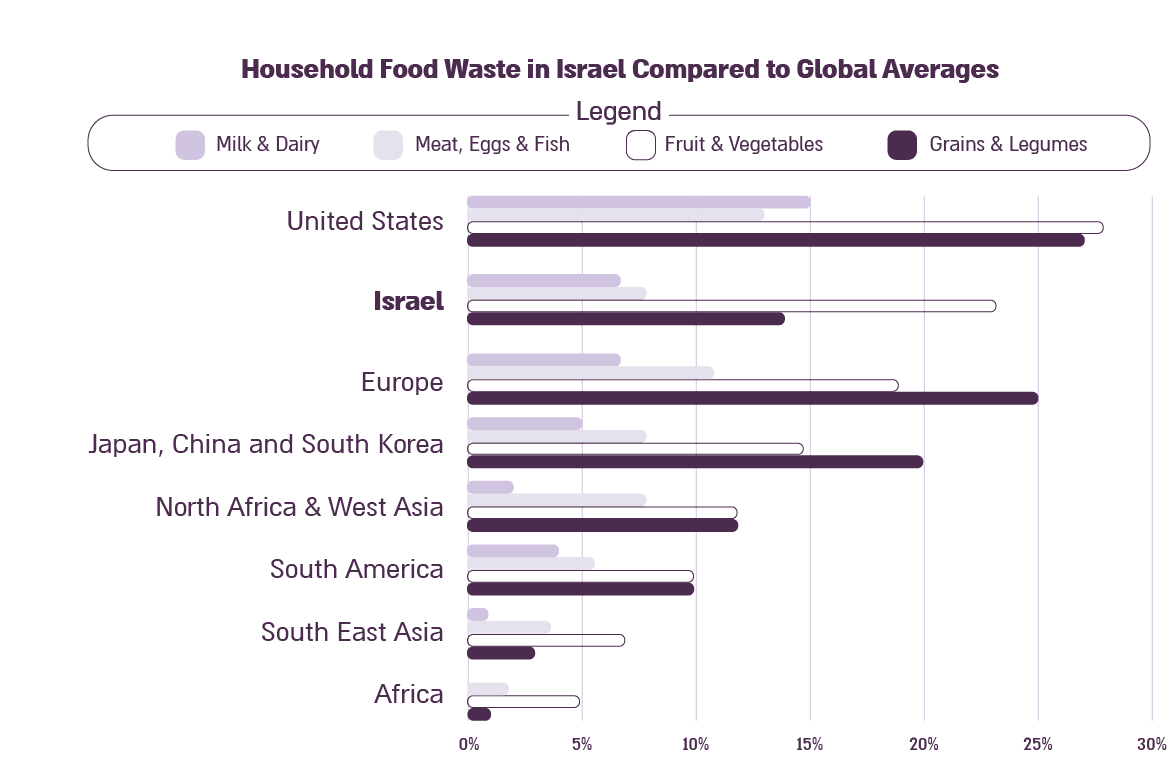
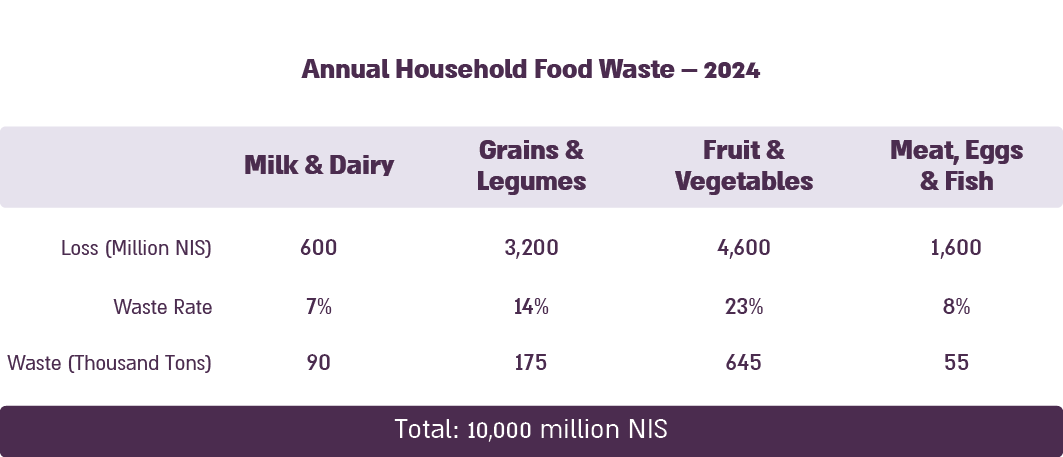
Household food waste is not unique to Israel, and the country’s rates are broadly in line with those of other developed nations. As in many Western countries, the highest rate of food waste in Israel occurs in the fruit and vegetables category: 23% of all fruit and vegetables purchased in Israel are thrown away, compared to 28% in the United States and 19% in Europe. This relatively high rate is largely due to the short shelf life of fresh produce and suboptimal storage practices.
In contrast, the waste rate for meat, fish, and dairy products is significantly lower, standing at around 8%. This is partly due to the ability to extend shelf life through freezing, as well as the relatively high cost per unit, which creates a stronger financial incentive to minimize waste. These rates are comparable to those in Europe and lower than those observed in the United States.
The household food waste rate for grains and legumes is approximately 14%, reflecting a mix of products with varying shelf lives—from short-lived items like bread and baked goods to long-lasting staples such as uncooked grains and legumes.
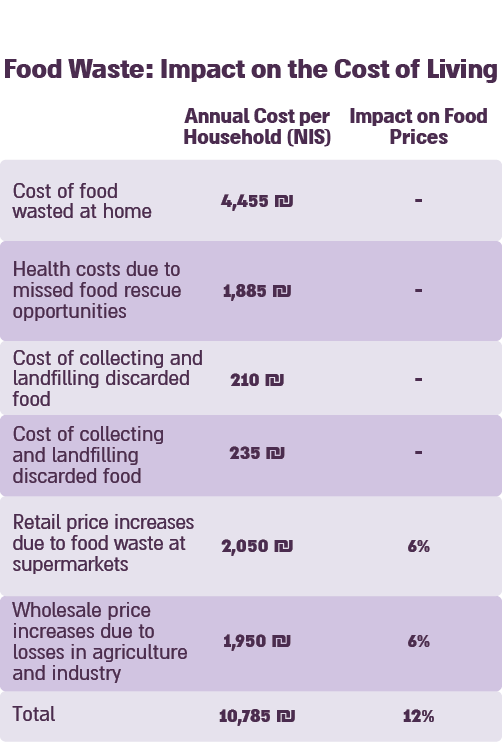
In Israel, where household food expenditure is relatively high by international standards,[1] food waste is a major driver of the cost of living. This includes both the direct cost of wasted food and the indirect effect of food waste on rising food prices.
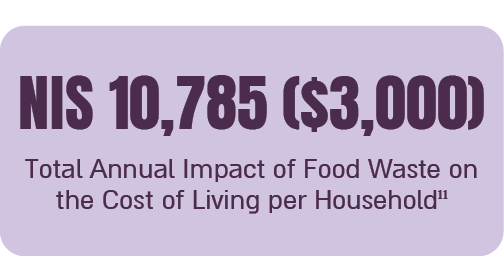
The total impact on the cost of living from household food waste is estimated at an additional NIS 10,785 ($3,000) per household per year.
Cost of Living – Direct Expenditure: Food purchased by households and subsequently discarded constitutes a direct financial loss. On average, the monthly household losses from wasted food, excluding external costs,[1] is estimated at NIS 375 ($101), totaling about NIS 4,500 ($1,216) per year. In addition, the cost of collecting and landfilling food waste is ultimately borne by consumers through municipal taxes and property fees, adding an estimated NIS 210 ($57) per household annually for the disposal of excess food.
Cost of Living – Rising Food Prices: Beyond the direct cost of food that is purchased but not consumed, food loss at earlier stages of the value chain also drives up prices. Economically, food prices reflect the cumulative costs of production and distribution across the entire value chain—including growing, processing, packaging, transportation, and marketing. Retail prices incorporate waste that occurs at the retail level, while wholesale prices reflect losses in agriculture and food manufacturing. Ultimately, these embedded costs are passed on to consumers, resulting in an additional annual burden of approximately NIS 4,000 ($1,080) per household—equivalent to a 12% increase in food prices.
Cost of Living – Health Impact of Untapped Food Rescue Potential: The health consequences of failing to rescue surplus food—and thereby reduce food insecurity—also contribute indirectly to the cost of living. Food insecurity is a well-documented risk factor for both chronic physical illnesses and mental health conditions. At the national level, it places an added burden on the healthcare system, leading to increased public health expenditures. In 2024, the health-related costs of food insecurity were estimated at approximately NIS 5.8b ($1.57b), or about NIS 1,950 ($527) per household. (See Chapter 5 for further details.)
Cost of Living – Environmental Impact from Emissions: Food waste also drives up the cost of living through its environmental impact. The greenhouse gas emissions and air pollutants generated by wasted food create negative externalities that harm ecosystems and public health. These environmental damages translate into economic costs—mainly through increased healthcare spending and reduced social welfare.[2] In 2024, the external environmental cost of food waste to the Israeli economy was estimated at NIS 1.6b ($430m), or approximately NIS 235 ($63) per household.
Beyond its direct impact on the cost of living, food waste and the associated processes of waste collection and landfilling also generate indirect costs. These stem from secondary effects such as waste transportation, fuel combustion, and environmental damage from greenhouse gas emissions, as detailed in this Report. Other impacts not captured in the environmental cost estimates presented here include increased road congestion and soil contamination.
Furthermore, landfilling organic waste causes it to decompose, releasing methane gas—a greenhouse gas whose Global Warming Potential (GWP) is 84 times higher than that of carbon dioxide over the short term (20 years), and 28 times higher over the long term (100 years).[3]
According to the findings of the 2024 Food Loss Report, 960,000 tons of household food waste were sent to landfills, resulting in approximately 300,000 additional garbage truck trips per year. These trips contribute to air pollution, road congestion, noise disturbances, and traffic accidents. Therefore, beyond the NIS 10b ($2.7b) worth of food waste through household consumption and the NIS 0.7b ($190m) cost of disposing of household food waste, additional external costs were incurred due to the environmental and traffic-related impacts.
[1] External costs not included in this estimate include waste collection and landfill expenses for discarded food, the environmental impact of greenhouse gas and air pollutant emissions, and wholesale price increases driven by food loss in agriculture and industry.
[2] The Green Book: Evaluation and Measurement of Environmental Costs, Ministry of Environmental Protection, 2024.
[3] IPCC, 2014: Climate Change 2014: Synthesis Report
[4] Global Food Security Index Economist 2018
[1] This analysis is based on the BDO value chain model, weighted data from the CBS (2023), the national waste composition survey by the Ministry of Environmental Protection (2012–2013), a Geocartography survey conducted in January 2019, and the study by Dr. Ofira Ayalon, Efrat Elimelech, and Eyal Ert: “What Gets Measured Gets Managed: A New Method of Measuring Household Food Waste” (Waste Management, 2018).
[2] The environmental cost presented here does not reflect the market value of the food waste, but rather the external cost of lost natural resources associated with food waste in this sector.